
Housing in Portland: Production, Affordability, Accountability
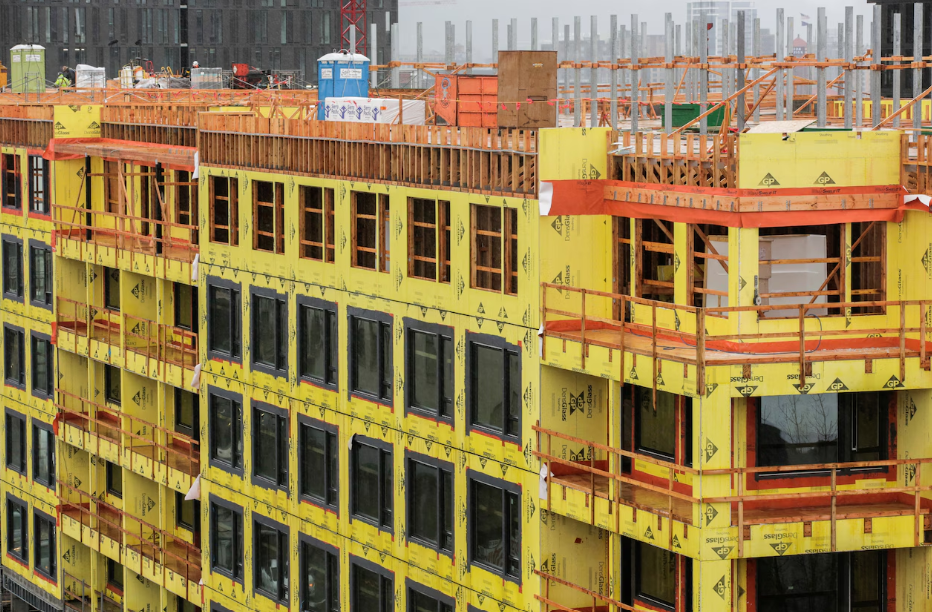
Photo credit: The Oregonian
Executive Summary
Portland’s housing challenge is not a mystery: we need more housing. We need it delivered faster. And we need it at a cost people can actually afford.
Today, too many projects never get built. It’s not because of a lack of demand, but because the system makes it too difficult, too slow, and too uncertain to succeed. Projects stall in permitting, costs rise through layers of requirements, and limited land capacity constraints where housing can be built. As risk increases, builders and capital don’t wait and they move to other cities where the path is clearer and more predictable.
This is not just a housing issue … it is a systems issue.
My approach is straightforward and grounded in results: fix the system so housing can be built at scale, at speed, and with the predictability required to attract investment. When projects pencil and move forward, supply increases and that is what ultimately improves affordability. It’s simply Economics 101: if the cost is too high, increasing supply will push down the cost.
The Problem: What’s Broken
Portland’s housing system is constrained at every stage, resulting in fewer homes and apartments being built than the city needs.
These challenges did not emerge overnight. They are the result of years of well-intentioned policies, added layers of regulation, and fragmented decision-making that, over time, have made housing more difficult and more expensive to build.
Permitting is slow and unpredictable, adding time, cost, and risk to every project. Fees and regulatory requirements continue to increase, often without a clear understanding of their impact on overall housing costs. At the same time, the amount of land available for housing at meaningful density is limited, particularly in well-located, transit-accessible areas, further restricting supply where demand is highest.
Construction costs continue to rise without corresponding efficiencies, and publicly funded housing is not consistently managed to a standard that ensures livability and long-term success. Compounding this, Portland lacks a clear, data-driven benchmark to understand how it compares to neighboring cities and counties.
Just as important, the system introduces a level of uncertainty that drives necessary investment away. Developers and capital providers make decisions across markets, and when timelines are unclear, costs are unpredictable, and approvals are uncertain, projects do not simply wait—they move to places where the path to completion is faster and more reliable.
Permitting timelines are inconsistent and often extended
Development fees and requirements reduce project feasibility
Limited effective land supply in high-demand, transit-accessible areas
High development risk is pushing projects—and capital—to other markets
Public housing performance varies without clear accountability
Without a clear benchmark and without enough land available to build at scale Portland is operating without a defined target or accountability for results.
Root Cause: A System That Doesn’t Prioritize Production
This is not simply a market issue; it is a systems issue. Portland’s housing framework has evolved into a complex set of processes, constraints, and incentives that are not aligned around a single goal: getting housing built.
At its core, the system lacks clear accountability for outcomes. There is no consistent benchmarking to understand how Portland compares to peer cities, and no defined standard for success in terms of speed, cost, or production. As a result, underperformance persists without visibility or urgency.
Incentives across the system prioritize compliance and process over production and results. Regulations are added over time without disciplined evaluation of their cumulative cost impact, contributing to rising development costs and limiting what can be built. At the same time, zoning and land use policies constrain effective land capacity, particularly in high-demand areas, preventing housing from being delivered at the scale required.
Portland’s permitting system is also largely funded by permit fees, making it highly dependent on development activity—and vulnerable to downturns that reduce both revenue and service capacity.
Equally important, the system introduces uncertainty at every stage for timeline, cost, and approvals. This lack of predictability increases risk, discourages investment, and drives capital to markets where projects are more certain to succeed.
Accountability is also fragmented across multiple agencies and decision points, making it difficult to coordinate, resolve issues, or consistently move projects forward. In publicly funded housing, governance and oversight lack clear performance expectations, leading to uneven outcomes and missed opportunities to fully utilize existing resources.
The result is a system that produces less housing, at higher cost, with greater risk and increasingly loses projects to other markets that are faster, more predictable, and more aligned around delivery.
The Policy: A Production-Driven Housing System
Portland’s housing challenge will not be solved with a single policy change but on a coordinated system focused on production, cost, and certainty. The goal is straightforward: create the conditions where housing gets built consistently, at scale, and with a level of predictability that attracts, rather than repels, investment.
This framework focuses on five priorities:
Benchmark and compete: Measure Portland’s timelines, costs, and requirements against peer cities and close the gaps so we are competitive for housing production.
Reduce risk and restore predictability: Implement guaranteed permitting timelines, clear accountability, and a “get to yes” approach. Expand by-right development so projects that meet defined standards can move forward without discretionary delays or uncertainty.
Increase effective land supply: Modernize zoning to enable more housing, especially in high-demand, transit-accessible areas and ensure that planned capacity translates into real, buildable opportunity.
Lower costs and unlock production at all levels: Reduce fees and regulatory complexity, enable small and mid-sized builders, and scale tools like pre-approved ADUs to expand housing production.
Align infrastructure with housing growth: Ensure utilities, transportation, and public services are planned and delivered in coordination with housing priorities, so infrastructure supports rather than constrains development in key areas.
These actions are interconnected. When timelines are predictable and approvals are clear, risk declines. When risk declines, capital stays and projects move forward. When land is available and infrastructure is aligned, more housing can be built. And when more projects pencil, supply increases improving affordability over time.
What Portland Can Learn from other Cities
Across the country, several cities are demonstrating that housing production can improve when systems are aligned around speed, cost, and accountability. One of the strongest examples is San Diego.
San Diego has taken a comprehensive, sustained approach to housing reform, combining permitting reform, zoning flexibility, and operational execution. The results are measurable:
Nearly 9,700 homes permitted in 2023 and ~8,800 in 2024
Significant expansion of ADU production, from 0 units in 2016 to over 2,100 annually
Streamlined approval processes supported by dedicated project managers and increased staffing
What sets San Diego apart is not a single policy, but how multiple reforms reinforce each other:
Streamlined, more predictable permitting reduces delays and uncertainty
Dedicated staff and project ownership ensure projects move through the system
Zoning and density tools expand where housing can be built
Consistency across administrations creates confidence for builders and investors
Other cities are moving in a similar direction. New York City’s recent reforms are expected to cut development timelines by months to years by simplifying approvals and reducing duplicative steps. Austin has combined faster permitting with large-scale production, resulting in a significant increase in housing supply and recent rent declines. Closer to home, Seattle has expanded ADUs and middle housing while continuing to reform its permitting system, demonstrating that these approaches can work in a Pacific Northwest context.
Research shows why this matters: even a 25% reduction in approval times can increase housing production by more than 12% and often more when it brings new projects into the pipeline.
The lesson is clear: Housing production improves when cities treat time, cost, and certainty as core policy priorities and not afterthoughts. Portland does not need to reinvent this. It needs to adopt what works and execute.
Tradeoffs & Risks
Reforming Portland’s housing system will require difficult and, at times, unpopular choices. Reducing fees and deferring revenue impacts near-term city budgets. Regulatory changes, particularly around zoning, by-right development, and design standards, may face resistance from stakeholders concerned about neighborhood change. Increasing density must be implemented thoughtfully to ensure it aligns with infrastructure, livability, and community expectations.
There are also execution risks. Delivering faster permitting, clearer accountability, and coordinated infrastructure requires cultural change within city government and sustained operational discipline. Without it, reforms may not translate into real improvements in timelines or outcomes.
At the same time, failing to act carries a larger and more persistent risk. When uncertainty remains high and land capacity is constrained, housing production will continue to lag and capital will continue to move to other markets where projects are more predictable and feasible.
The choice is not between change and stability. It is between:
Accepting short-term tradeoffs to enable long-term housing production, or
Continuing a system that produces too little housing, at too high a cost, with declining competitiveness
The cost of inaction is clear: continued underproduction, rising prices, reduced access to housing, and a growing gap between Portland and the cities it competes with for investment and development.
Implementation Plan
First 100 Days
Establish the foundation for accountability, speed, and execution. Launch a regional comparative study to benchmark Portland’s permitting timelines, costs, and requirements against peer jurisdictions. Begin a full permitting and process audit to identify delays, redundancies, and key bottlenecks.
At the same time, identify high-cost regulatory barriers for near-term action and initiate a governance review of publicly funded housing, including performance, occupancy, and livability standards.
Stand up the initial framework for:
Guaranteed permitting timelines
A “get to yes” operating model with clear accountability
Public reporting of key housing metrics
Year One
Move from analysis to implementation, focusing on reducing risk, lowering costs, and increasing production capacity.
Implement guaranteed permit timelines with accountability
Launch SDC deferral and targeted fee reductions
Introduce by-right development pathways for qualifying projects
Roll out the pre-approved ADU program to accelerate small-scale production
Begin zoning updates along transit corridors to expand effective land supply
Align initial infrastructure and utility planning with priority growth areas
Publish a housing performance dashboard tracking timelines, costs, and production
Years 2–3+
Scale and institutionalize the system to ensure sustained housing production.
Expand zoning reforms citywide to increase capacity in high-demand areas
Continue removing regulatory barriers and enforcing cost discipline
Fully integrate by-right development into the approval system
Align long-term infrastructure investments with housing growth strategy
Implement performance-based oversight across publicly funded housing
Continuously benchmark against peer cities and adjust policies to remain competitive
This sequencing ensures early wins, builds momentum, and transitions quickly from planning to measurable increases in housing production.
What Success Looks Like
Success will be measured in real, visible outcomes: faster approvals, lower costs, increased production, and a system that consistently delivers housing at scale.
We should see:
Shorter, predictable permitting timelines with clear accountability
Lower per-unit development costs and more projects that pencil
Increased housing production across all types and price points
Expanded effective land capacity, especially in transit-accessible areas
Greater participation from small builders and homeowners
Reduced vacancy and improved performance in subsidized housing
More investment staying in Portland, rather than shifting to other markets
As these conditions take hold, supply increases, competition improves, and upward pressure on housing costs begins to ease which makes housing more attainable for working households. And just as importantly, Portland will have a system that is predictable, accountable, and trusted because it delivers results.
Bottom Line
Portland does not have a shortage of ideas. It has a system that makes it too hard to build and too easy for housing to be built somewhere else. If we want affordability, we must enable production. If we want production, we must reduce risk, increase capacity, and make the system work. That is the work and it is achievable with focus, discipline, and execution.
Sources
Housing Production & ADU Data (San Diego)
City of San Diego, Annual Housing Progress Report (2025)
San Diego Association of Governments (SANDAG), Accessory Dwelling Unit Report (2024)
University of California San Diego, Center for Housing Policy & Design, ADU Production in San Diego County
California Department of Housing & Community Development (HCD), Annual Progress Report Data
ADU Policy & Pre-Approved Plans (Best Practices)
County of San Diego, Housing Element & ADU Program Materials
San Diego Housing Commission, ADU Development Program & Production Objectives
Housing Supply & Policy Research
Bipartisan Policy Center, Cities Leading the Way on Housing
National Bureau of Economic Research (NBER) / Journal of Urban Economics research on permitting delays and housing supply